Written by Costas Constantinou
Why does some professional development lead to lasting improvements in teaching, while other initiatives have little impact?
The answer often lies not simply in the quality of the training itself, but in how professional development is led, prioritised and embedded in the everyday life of a school. Leading continuing professional development (CPD) is one of the most strategically important and complex responsibilities of school leadership. Its long-term impact depends on the decisions leaders make, the habits they establish and the systems they put in place to support sustained improvement.
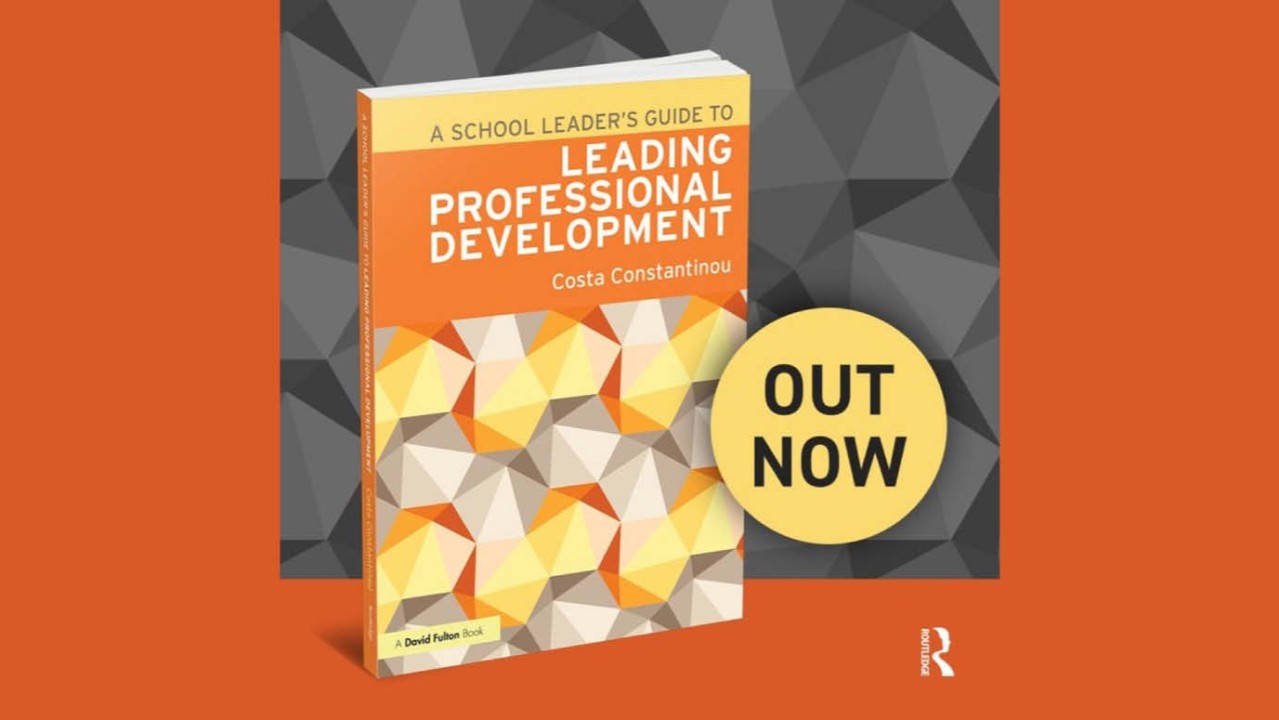
Chapter 4 of my book, A School Leader’s Guide to Leading Professional Development, explores this challenge. Effective CPD leadership is not about doing more; it is about creating the time, focus and conditions for teachers to improve their practice deliberately and consistently.
At a time when teacher workload remains high, and morale is fragile, getting CPD right has never been more important. Recruitment and retention continue to challenge schools, yet many well-intentioned initiatives fail to deliver the impact leaders hope for.
Too often, professional development happens to teachers rather than with them. If we want teachers to remain in the profession and continue to grow, we need to make professional learning meaningful, sustained and shaped by the people closest to the work.
At Veema, this belief underpins our work with schools. We focus on creating CPD that values teachers as professionals, gives them space to think and practise, and supports long-term development. National Professional Qualifications (NPQs), when implemented well, offer one example of how structured, high-impact professional development can build leadership capacity and professional confidence over time.
Achieving this requires schools to move beyond one-off training events towards systems that make professional learning part of everyday practice. Drawing on leadership research and behavioural science, this article outlines five practical strategies school leaders can use to strengthen their CPD provision, particularly during periods of challenge or uncertainty.
Strategic leadership and the purpose of CPD
Strategic leadership of CPD begins with clarity of purpose. Professional development is not an add-on to school improvement; it is the mechanism through which improvement happens. Leaders who rely on isolated training sessions often struggle to demonstrate sustained impact, while those who embed CPD within wider strategic priorities are far more likely to see meaningful change.
Periods of disruption—such as inspection pressure, staffing instability, or wider system challenges—quickly reveal whether CPD is strategically led or merely reactive. Agile leaders are able to prioritise what matters most, communicate clearly, and align professional learning with both immediate needs and long-term goals. Importantly, strategic CPD leadership does not pause improvement during difficult times; instead, it adapts focus, reduces overload, and protects the habits that support effective teaching.
Strategy 1: Lead CPD through sequenced systems, not standalone sessions
One of the most important strategic shifts leaders can make is to design CPD as a sequenced system, rather than a collection of isolated events. Systems shape behaviour; events rarely do. A strong CPD system includes routines, expectations, follow-up structures, and accountability that ensure learning continues well beyond the training room.
This also means moving away from “tick-box” CPD, even in areas where compliance is required. Statutory training can still be engaging, reflective, and professionally meaningful when leaders think creatively about how it is delivered and revisited.
Try this:
Map CPD across the year using a simple sequence: introduce → practise → reflect → revisit. Identify where new learning will be returned to, coached, or refined, rather than assuming one session is sufficient.
Strategy 2: Prioritise deliberate practice over coverage
Strategic CPD leadership requires leaders to resist the temptation to cover too much. Instead, leaders should prioritise deliberate practice focused work on specific aspects of teaching, supported by feedback and reflection. Deliberate practice bridges the gap between knowing and doing, allowing teachers to translate theory into classroom action.
In practice, this means breaking complex teaching strategies into smaller components such as questioning, modelling, or feedback. Teachers can then rehearse these skills, observe one another, and receive targeted feedback. Narrowing the focus reduces cognitive overload and increases the likelihood that new practices become embedded.
Try this:
Choose one instructional focus per term and build CPD around it. Support staff with rehearsal opportunities, peer observation, and short feedback conversations rather than introducing multiple initiatives at once.
Strategy 3: Build habits that make improvement inevitable
Habits sit at the heart of sustained professional growth. Strategic CPD leaders pay close attention to the habits they are reinforcing both intentionally and unintentionally. Research into behaviour change shows that habits are more likely to stick when they are obvious, easy, rewarding, and routine.
Leaders can support this by making effective practice visible through modelling, sharing examples, and professional dialogue. Time for reflection and collaboration should be built
into the working week, not treated as optional extras. Recognising progress, however small, reinforces positive behaviours and signals that professional learning is valued.
Just as important is disrupting unhelpful habits, such as overloaded CPD calendars or constant shifts in focus.
Try this:
Audit your CPD offer and identify one habit you want to strengthen (e.g. regular reflection in team meetings) and one you want to remove (e.g. last-minute initiatives). Simplify ruthlessly.
Strategy 4: Create thinking environments for professional learning
Strategic leadership of CPD is as much about how people think as what they do. Teachers need time and psychological safety to think deeply about their practice, particularly when improvement requires change or risk-taking. Leaders who create strong thinking environments enable deeper, more sustained learning.
This involves structuring CPD to include dialogue, coaching, and reflection, rather than passive information delivery. Leaders should ask high-quality questions, encourage professional curiosity, and avoid cultures of compliance. When teachers feel trusted and intellectually engaged, they are more likely to take ownership of their development.
Try this:
Build structured discussion time into CPD sessions using high-quality prompts (e.g. “What would this look like in your classroom?” or “What might get in the way?”). Protect this time from being squeezed out.
Strategy 5: Protect time and reduce overload
Time is one of the most strategic resources leaders control. CPD fails when it competes with too many other priorities or is squeezed into already overloaded schedules. Strategic leaders protect time for professional learning and make deliberate decisions about what to stop doing.
This might involve auditing CPD activities to remove duplication, reducing administrative demands, or aligning meetings more closely with improvement priorities. Creating space for practice and reflection sends a powerful message that professional learning matters.
Try this:
Review all meetings and CPD activity over a term. Ask: What can we stop, streamline, or repurpose to protect time for professional learning?
Strategic leadership of CPD is not about finding the perfect programme or delivering more training. It is about building systems, habits, and environments that allow teachers to improve their practice over time. By leading CPD through sequenced systems, prioritising deliberate practice, shaping habits, creating thinking environments, and protecting time, school leaders can ensure professional development leads to sustained and meaningful improvement.
In my book, I aim to provide school leaders with practical ways of planning and delivering whole-school CPD. Chapter 4 offers a glimpse of how this can look in practice, reminding us that improvement is not accelerated by urgency alone, but by thoughtful leadership that gives people the time, focus, and support they need to get better. When CPD is led strategically, it becomes a powerful lever for school improvement, resilient in times of crisis and effective in times of stability.
More details about the book, including free shipping, can be found here: https://veema.co.uk/a-school-leaders-guide-to-leading-professional-development/
Thanks for reading,
Costas Constantinou (BA, PGCE, MA)
Director of Education
What’s Coming Up at Veema Education in October & November 2026
Book selected programmes and receive complimentary Leadership Hub access. Terms and conditions apply.
9 Weeks of Great Pedagogy – Registration Now Open
Curious to see what makes this programme so special? Click HERE.
Find out more and register here!
Spaces still available on our NPQLTD & NPQH Cohorts
Registration is open for our November NPQ programmes. Find out what it means to study an NPQ with Veema and how we support you throughout your leadership journey.
Adaptive Teaching – Online Course with Isabella Wallace
Explore our online course on Adaptive Teaching, led by Isabella Wallace.
Bespoke In-School INSET
Planning your next INSET day? Work with Veema to deliver training tailored to your school’s priorities.